Problem Statement

The Musiktheater im Revier (MiR) aimed to reach a younger audience under the age of 40 who rarely or never attend theatre performances. Surveys and expert interviews revealed several barriers: lack of time, competing leisure interests (especially digital media and gaming), and the perception of theatre as old-fashioned or inaccessible. In addition, the COVID-19 pandemic eliminated traditional on-site experiences and limited direct interaction with visitors. The theatre needed a digital, low-threshold solution that could spark curiosity, reduce prejudices, and create a new point of contact—without requiring physical presence or high financial investment. The challenge was therefore to design an engaging digital experience that would present the theatre in a modern, interactive way while highlighting its architecture, backstage work, and professional diversity.
Idea and Concept

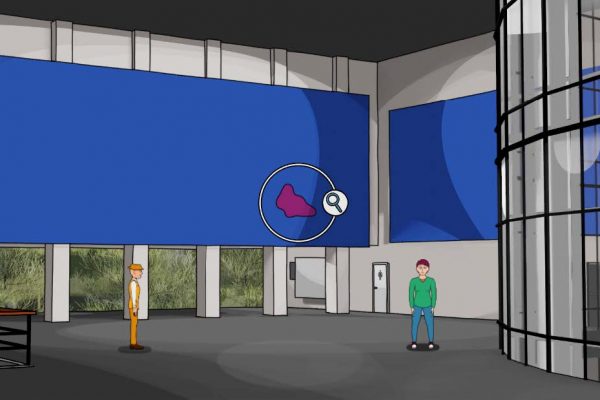
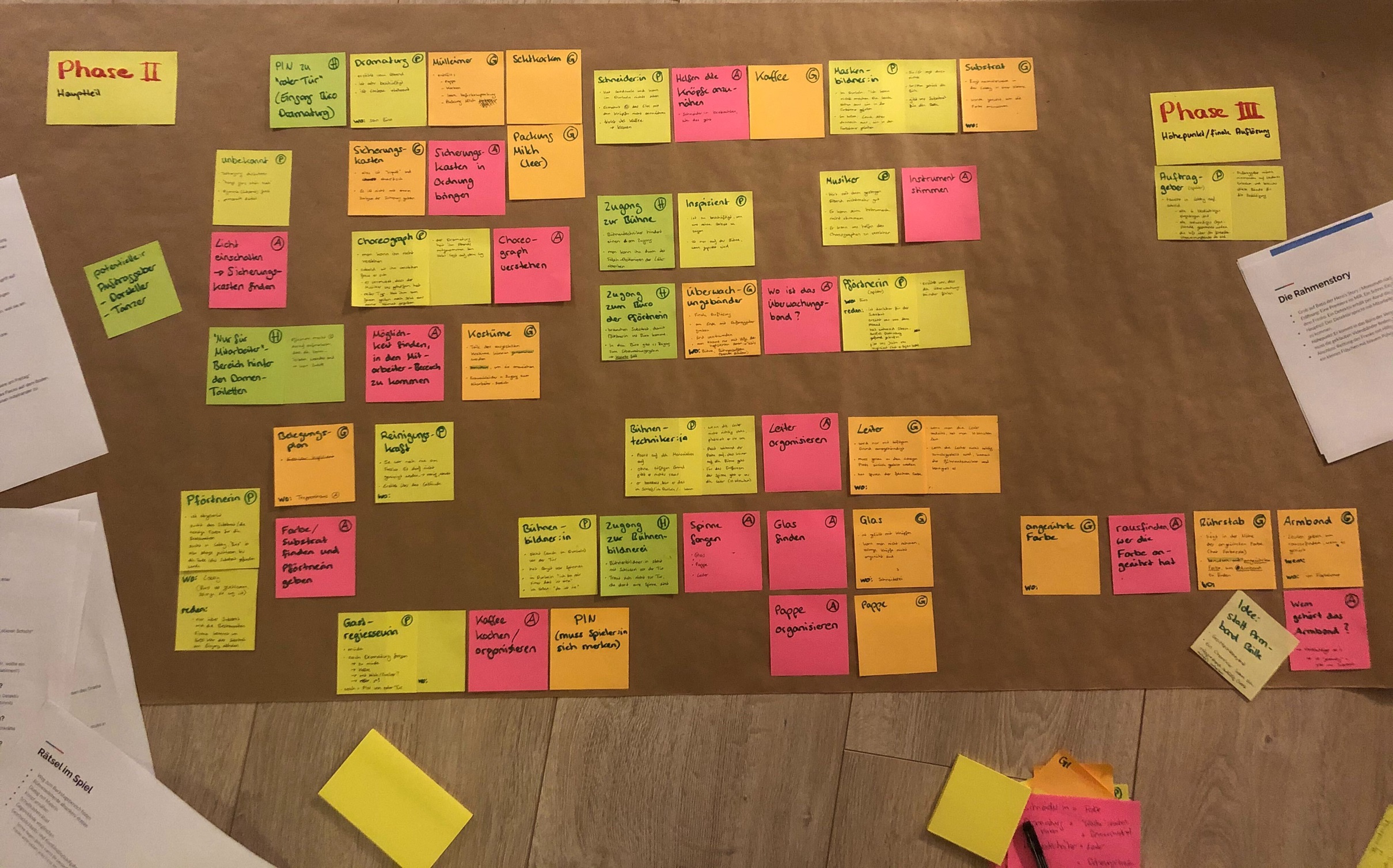
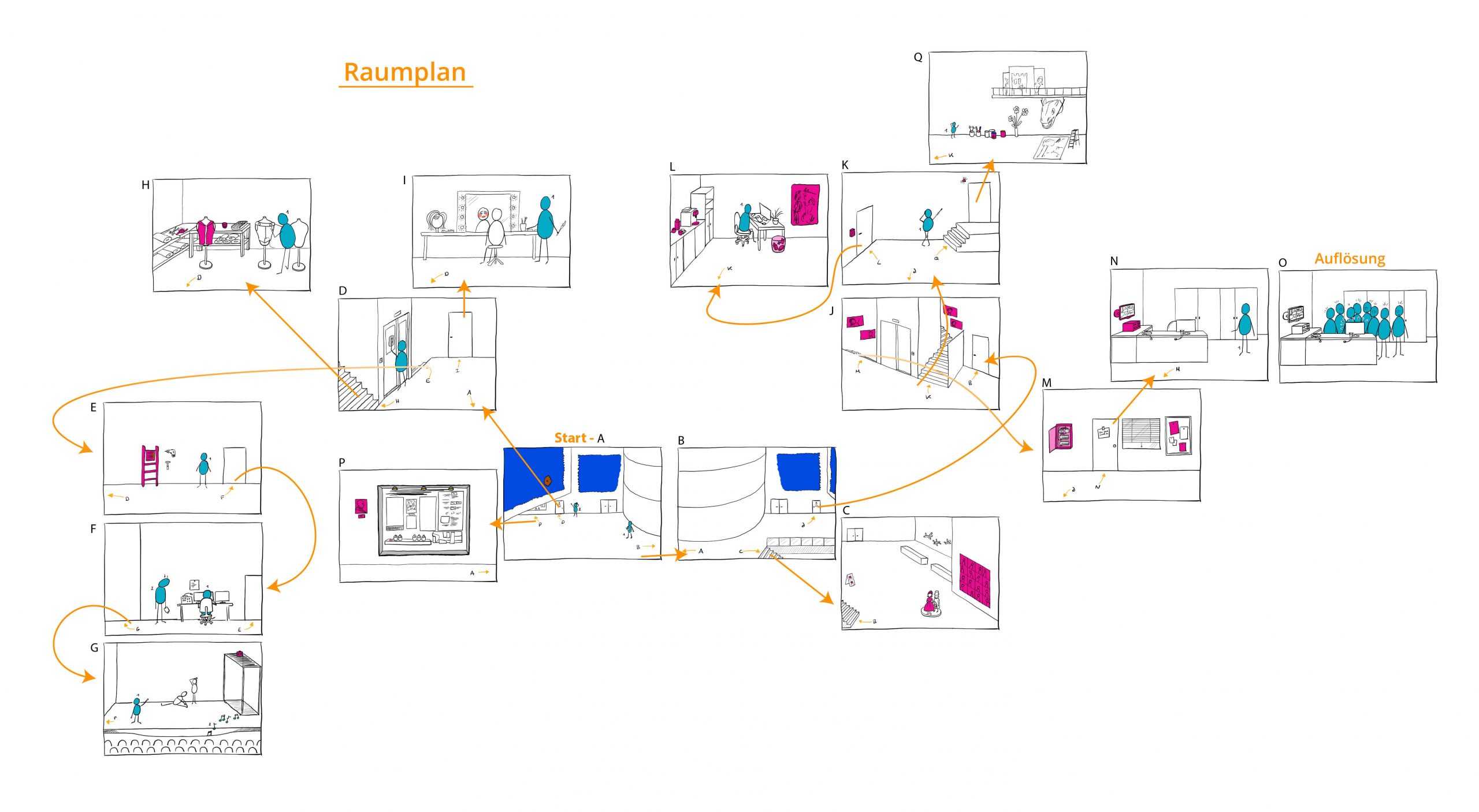
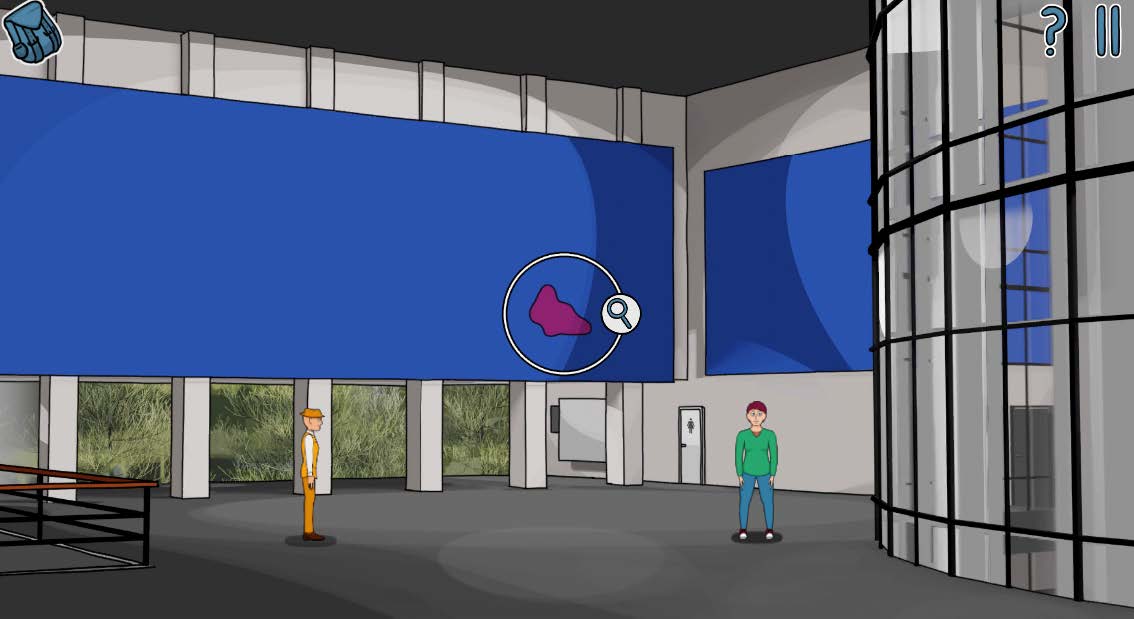
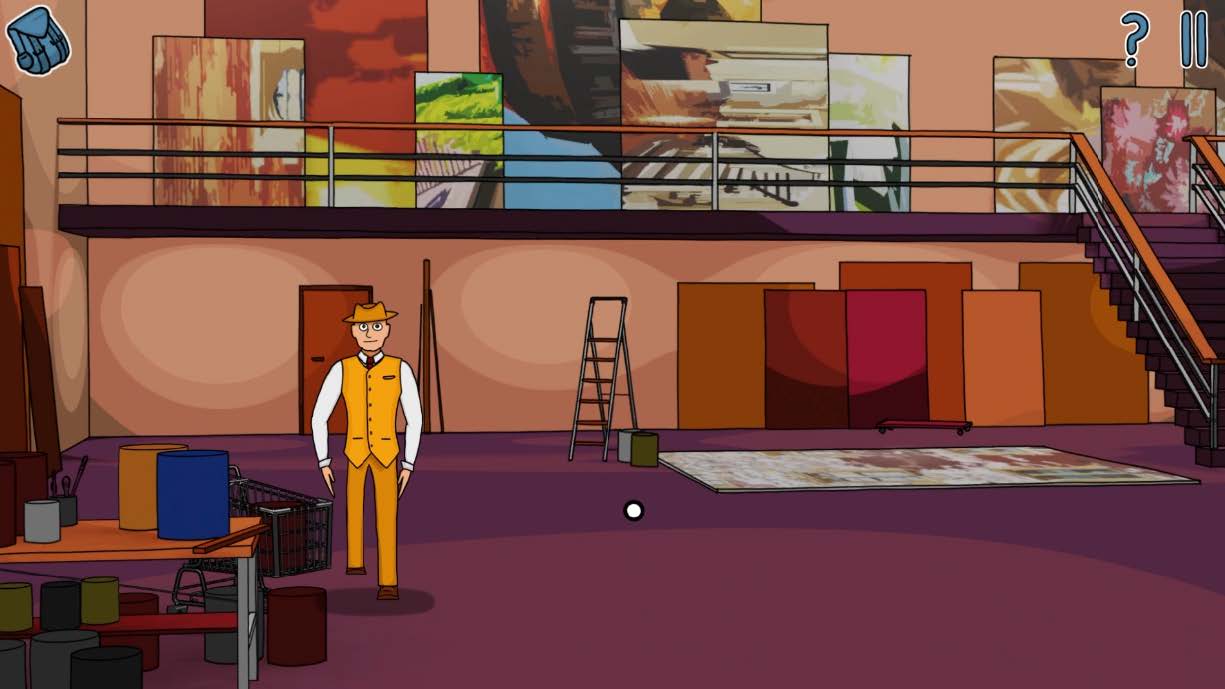
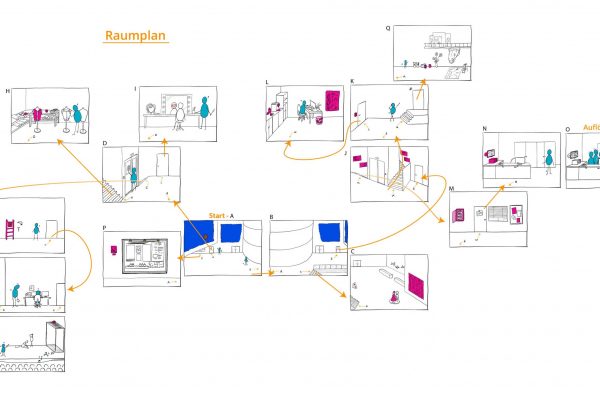
The project resulted in ”MiRstery – Vorhang zu…” , a point-and-click adventure game set inside the theatre building. Instead of focusing on performances, the game places the spotlight on the people and professions behind the scenes. Players take on the role of a private detective investigating the damage of one of the iconic blue frescoes in the foyer. This narrative framework justifies access to normally restricted backstage areas and creates a strong intrinsic motivation to explore.

The concept intentionally combines:

  • Edutainment – playful learning about theatre professions and workflows

  • Exploration – a digital reconstruction inspired by the real theatre spaces

  • Interactivity – puzzle mechanics and dialogue systems typical of classic adventure games

The decision for a point-and-click format was strategic. It offers intuitive controls, low technical barriers, and accessibility across devices—including smartphones. By embedding educational content into a detective story, information about theatre work is conveyed implicitly rather than didactically. The game was designed as a free web-based experience to minimize entry barriers and attract digitally oriented target groups.

Implementation

The game was developed as a 2D browser-based HTML5 application using WebGL export to ensure cross-platform compatibility and low hardware requirements.

Technology stack:

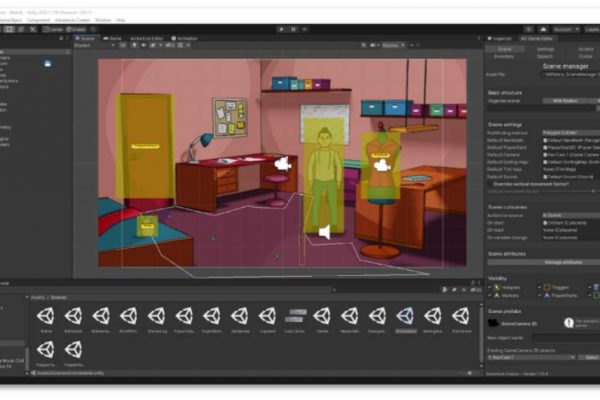
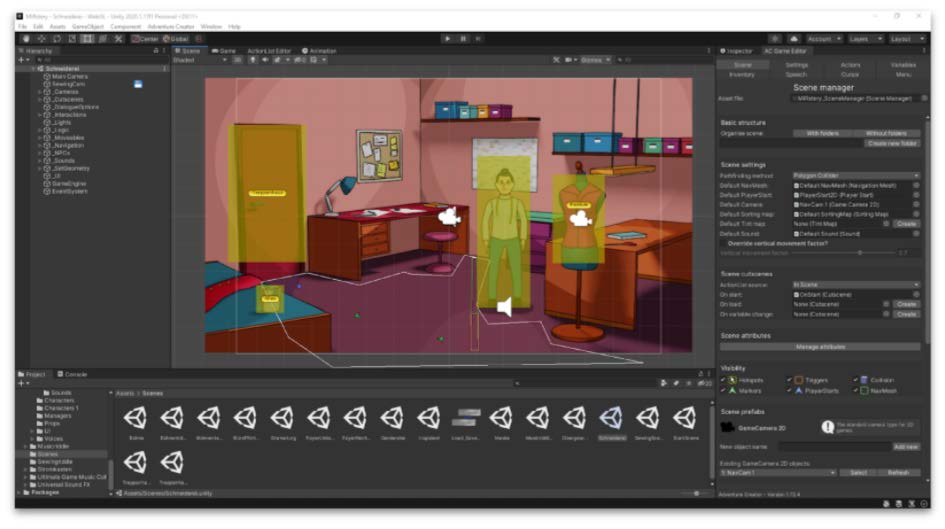
  • Unity (with the Adventure Creator framework)

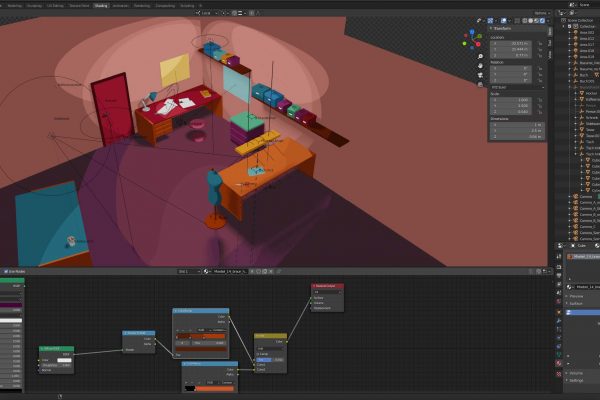
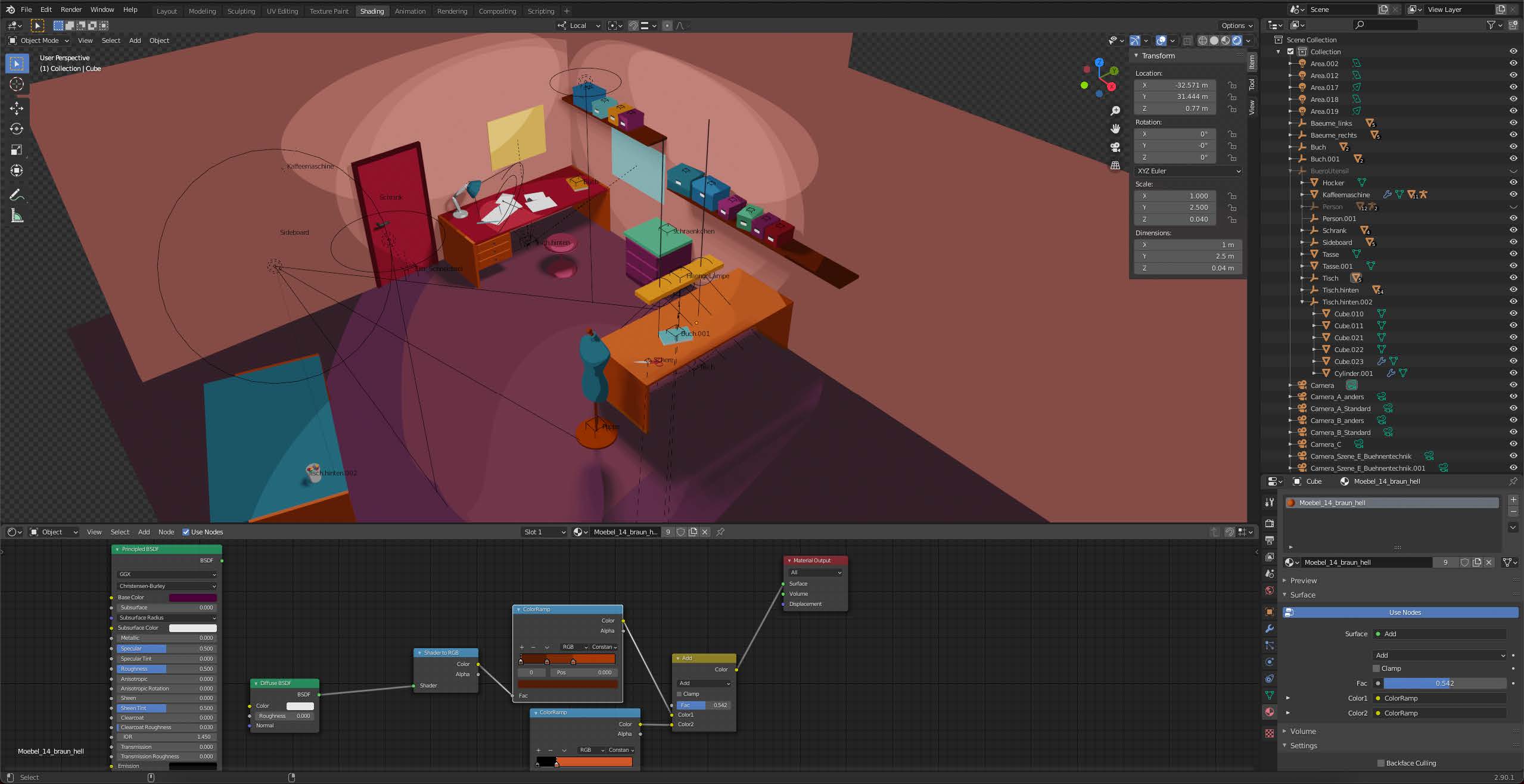
  • Blender for 3D-based background rendering

  • Photoshop for visual refinement

  • Spriter Pro for character animation

  • C# for gameplay logic and custom puzzle systems

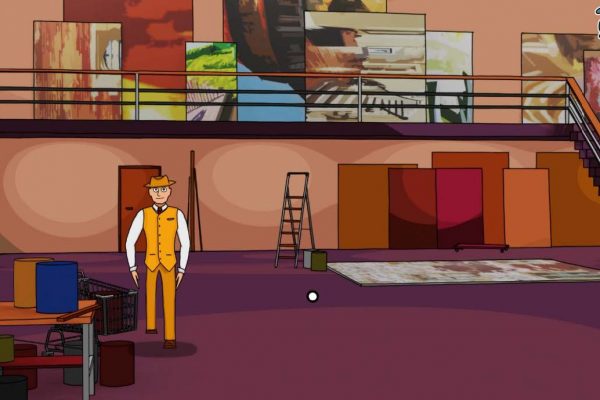
Although inspired by the real building, environments were recreated artistically rather than photorealistically. This avoided security concerns and allowed for a more colorful, stylized aesthetic.

Module

Master Software- and Multimediaproject

Duration

04/2020 – 06/2021

Team Member/s

Til Franzen
Andrea Kipp
Kirill Kronhardt